NovacraftNovacraft
Booking Q4 · 2026Q4 2026
Case study

Podzyme

Press play. Or press record.

Product design, engineering & platform — end to end2023 — present
Visit live site

Podcasting splits its users in two: people who listen and people who make. Most products pick a side. Podzyme is built for the handoff between them — a feed, player and clips experience for listeners on one side, and publishing, live broadcasting and community tools for creators on the other, in the same product.

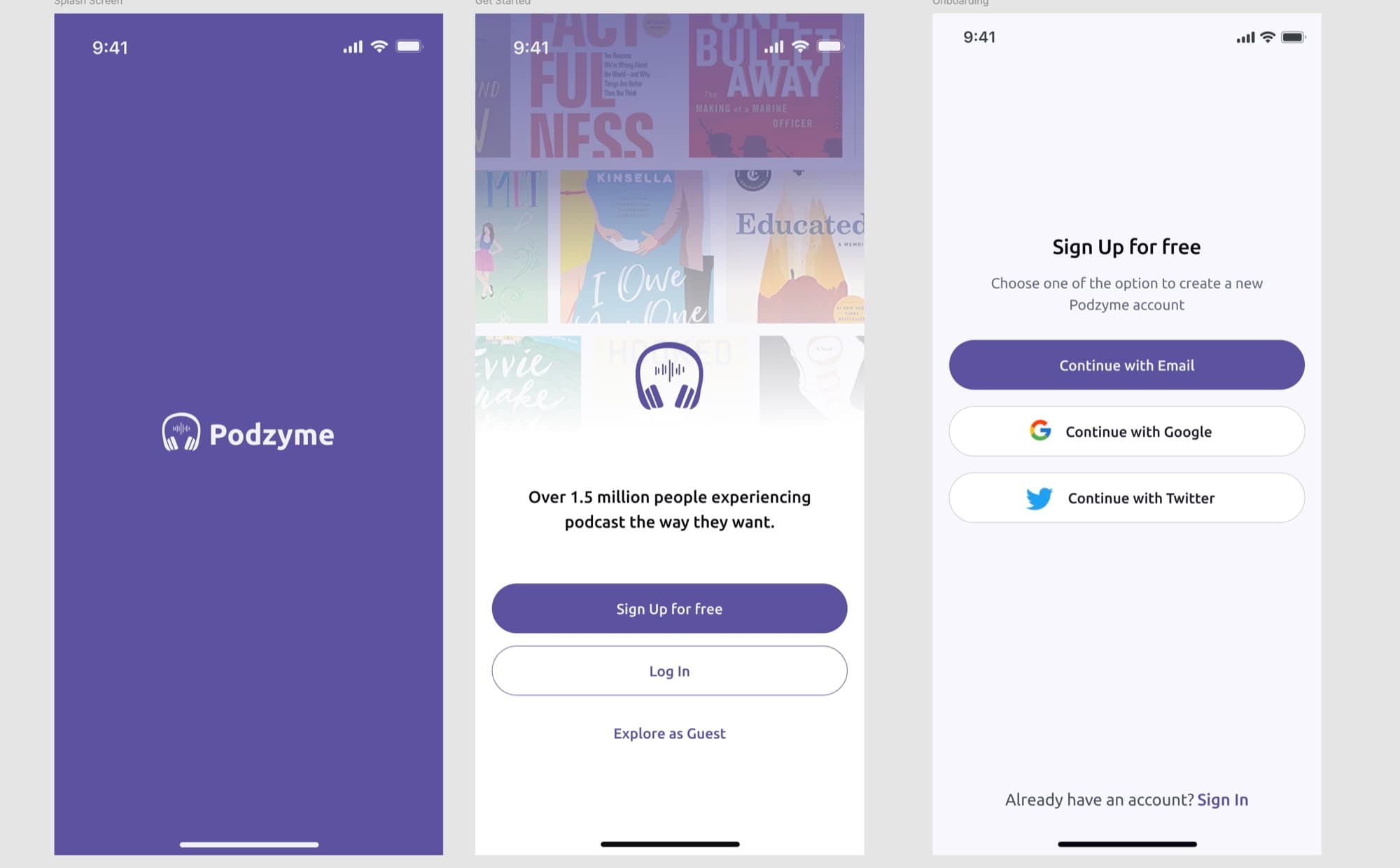
Novacraft built the whole platform: the iOS and Android app, the web app with its creator Studio, the moderation console, the marketing site, and the backend that runs podcasts, episodes, clips, communities and live rooms. Guest browsing works everywhere, so the product sells itself before it asks for an account.

Audio is unforgiving infrastructure — playback has to survive app switches, live rooms have to hold a crowd, and a clip has to load before the viewer loses interest. The stack leans on a dedicated mobile track-player service, HLS for live video, Socket.io for room events and chat, and AWS Rekognition to keep uploaded artwork moderated at scale.

Architecture

Five surfaces, one system.

Mobile, web, admin, marketing and the API beneath them — designed together, shipped together.

Backend API

  • NestJS 10
  • PostgreSQL
  • Prisma
  • Socket.io

Domain modules for podcasts, episodes, channels, clips, communities, live rooms, playlists, feeds and payments, with community gateways over Socket.io and Rekognition-backed image moderation on uploads.

25+
domain modules

Mobile app

  • React Native 0.82
  • react-native-track-player
  • Socket.io

Listening built on a native track-player service — background playback, queue and speed control — plus live rooms, clips, communities and Google/Twitter sign-in, shipped to both stores from one codebase with OTA updates.

iOS + Android
single codebase

Web app + Studio

  • Next.js 16
  • React 19
  • hls.js

Discover, listen, watch clips and join live rooms in the browser — then flip to Studio to publish episodes, go live and read audience analytics: subscribers, plays and listening time.

~21
routes
~86
UI components

Admin console

  • Next.js
  • Formik + Yup
  • hls.js

The control plane: users, channels, categories, moods, clips, transactions, promotions and sponsorship plans, with in-panel video preview and bulk podcast seeding.

Landing page

  • Next.js 16
  • motion.dev
  • Lenis

A motion-driven, audio-native page telling the two-sided story — every waveform on it is drawn from real episode amplitude data, and app screens are live DOM recreations rather than screenshots.

In the product

The parts that earn their keep.

01

Live rooms with real-time everything

Creators go live in audio or video from the browser or the app; listeners join rooms with chat, reactions and picture-in-picture. HLS carries the stream, Socket.io carries the room — presence, messages and moderation events land instantly.

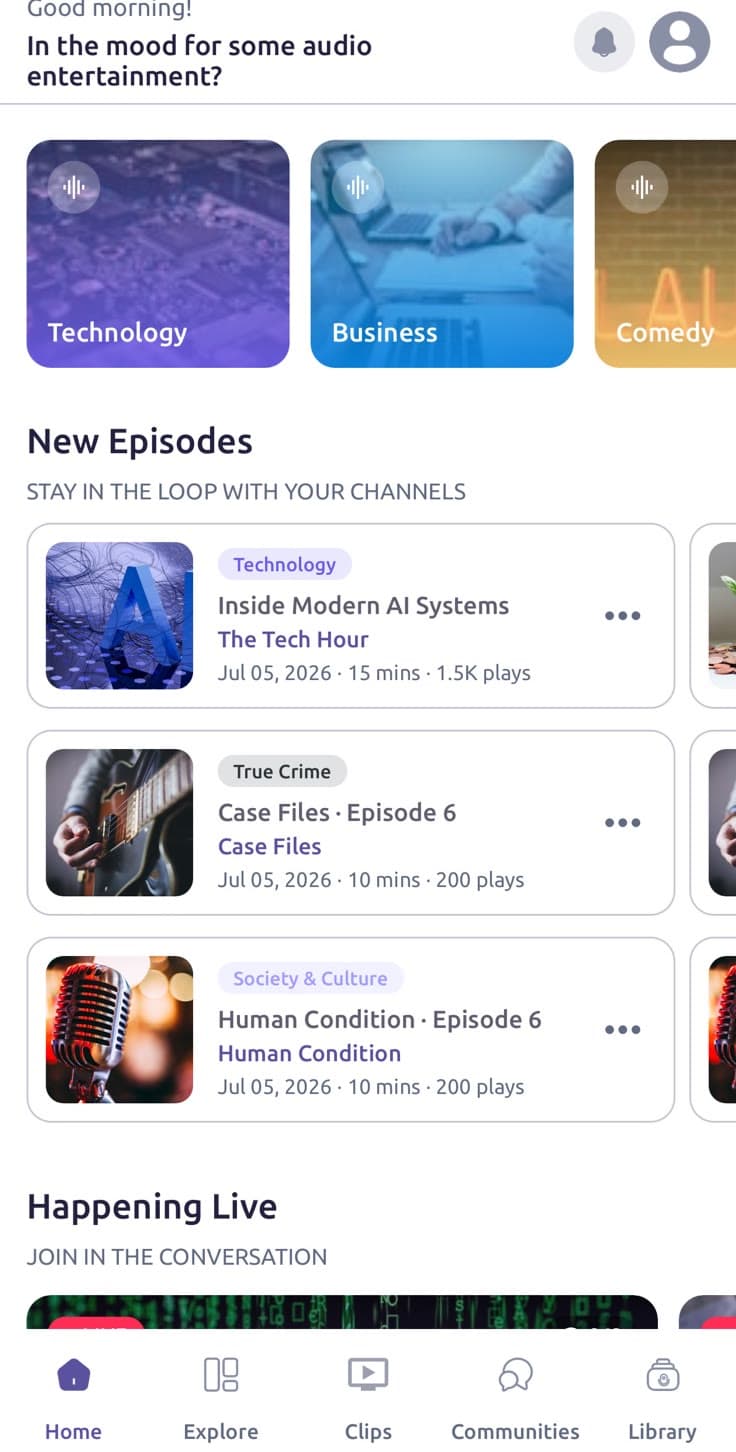
Podzyme app home — categories, new episodes and live rooms
02

A player built for podcasts

Speed control from 0.75× to 2×, queueing, downloads and cross-device continuity — pause on the web, resume in the app. On mobile the player is a native track-player service, so playback survives navigation, backgrounding and the lock screen.

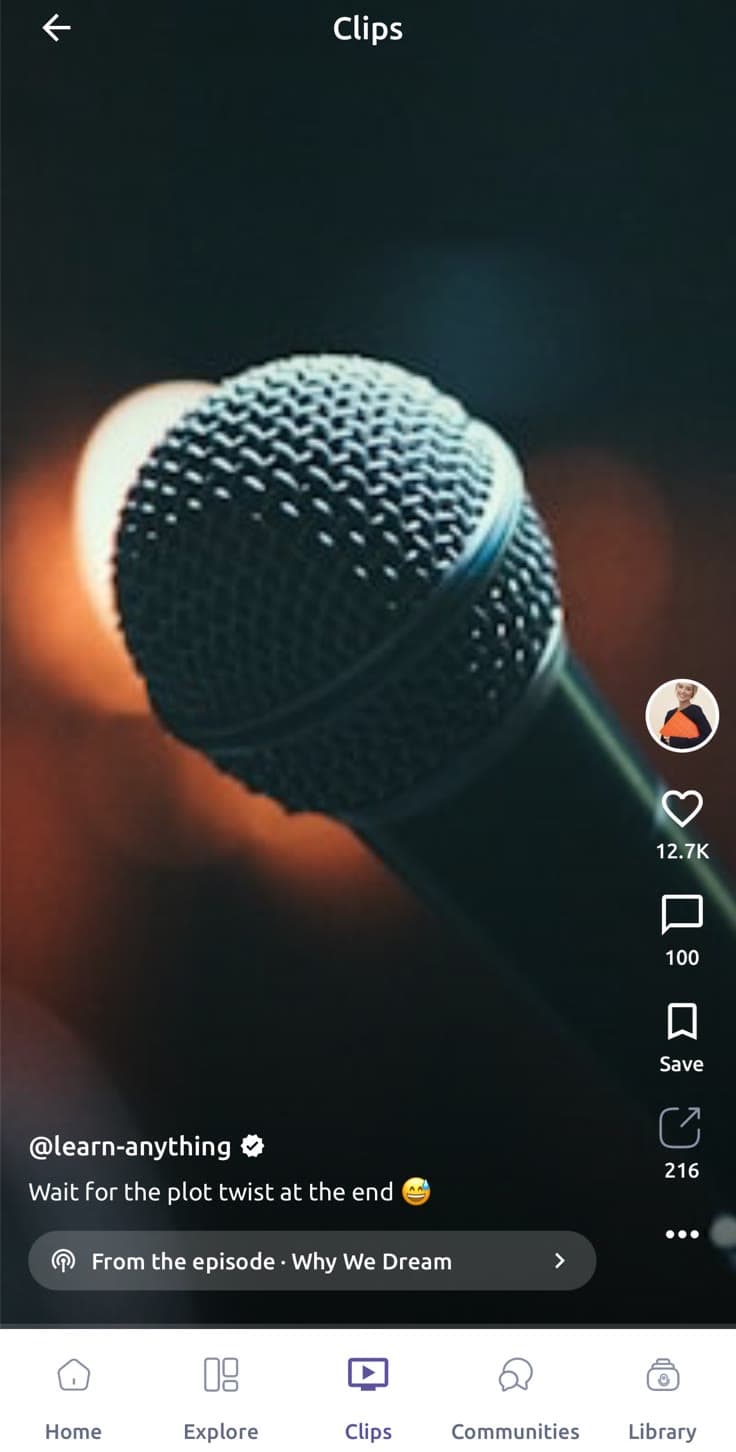
Podzyme clips — vertical swipeable player with likes, comments and saves
03

Clips: moments that travel

Episode moments become a vertical, swipeable feed — the shareable unit that pulls new listeners back to the full show. Clips are extracted server-side and stream instantly, with moderation on every frame of artwork that comes with them.

Podzyme creator studio analytics
04

Studio for creators

Direct-to-storage episode uploads with progress tracking, browser-based live broadcasting, community posts and polls, and an analytics dashboard that answers the only questions creators actually ask: who is listening, how much, and where they stopped.

5
production surfaces, one backend
25+
backend domain modules
~86
web UI components
10
media, payment & infra integrations
Runs on
  • Stripe
  • Paystack
  • Flutterwave
  • AWS S3
  • AWS Rekognition
  • Cloudinary
  • Firebase
  • Termii
  • Socket.io
  • HLS

Want a platform like this?

Tell us what you're building — we reply within 8 business hours. The average response time is 1 hour.